.png)
Creating a residential tenancy contract in Dubai is a straightforward process if you follow the correct steps. This guide provides a precise, actionable method to draft and register a legally compliant tenancy contract. To proceed, you will need details of both parties, property and tenancy conditions, the Standard Ejari Template, and a RERA-compliant addendum based on agreed tenancy terms.
If you first want to understand what the contract is and its legal standing, see our guide to what a tenancy contract in Dubai is.
1. Gather Required Information
Before drafting the contract, collect the necessary documents and details.
These include:
- the Title Deed of the property
- the Emirates ID of the tenant
- the passport of the landlord of the landlord (the Emirates ID is added only when the passport does not contain the landlord's signature, or when the landlord signs as on their Emirates ID)
- DEWA premise number (can be found on a DEWA bill, previous Ejari registration, or directly through DEWA’s online portal)
- Property details (can be retrieved from the Title Deed or a previous tenancy contract)
- Copy of POA (if involved)
Also have at hand, not documents but required details: email addresses for both parties and a local UAE mobile number for the tenant.
2. Choose how to create your tenancy contract
There are three ways to prepare a tenancy contract in Dubai.
Option 1: Use the official Ejari template
The Dubai Land Department (DLD) provides a standard tenancy contract template.
You can download the latest version from the official DLD website and complete it manually.
Use the latest version from the DLD page: older versions may be missing fields that Ejari registration now requires.
Option 2: Have an agent prepare it
An agent drafts the contract and addendum for a fee. If the property is under a management contract, the property management company prepares it.
Option 3: Use a structured online platform
Instead of working with a blank template, landlords and tenants can create a tenancy contract through a structured online platform.
The contract is generated based on the details you provide, with all required fields, clauses, and formatting aligned with current RERA standards from the start.
3. Complete the Ejari Template
Follow the example. Fill in the contract template with accurate information. Include:
- Landlord and Tenant Details (complete names exactly as on their ID documents)

- Property Specifics

- Tenancy Details
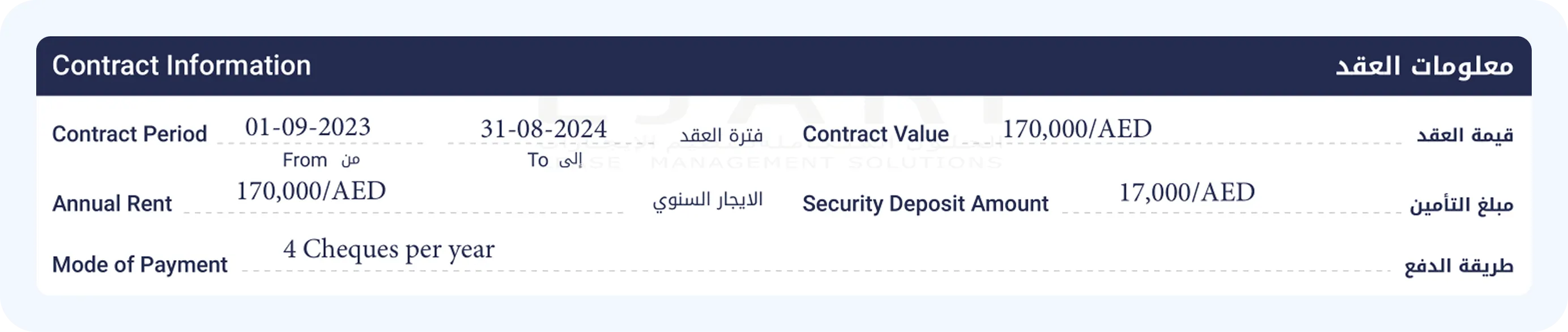
- Additional Fees & Conditions

When completing the template manually, accuracy is critical. Missing fields or unclear clauses may lead to delays or rejection during Ejari registration.
The addendum is not a form: the parties draft it, or adapt an example or a previous addendum, and both sign it. Its conditions must not contradict current rental laws. Experienced landlords typically include a clear payment schedule, utilities responsibilities, an early termination clause, a penalty for bounced cheques, a viewing-access clause, and a complete inventory list.
Creating the tenancy contract online automates this step by generating the contract based on the provided details, reducing the risk of errors and inconsistencies.
4. Send the Contract for Review
Before finalizing the contract, share it with the other party for review. Be transparent and specific about all terms to avoid disputes later. Agreeing on key terms before sharing the contract helps build trust and ensures a smoother finalization.
5. Collect Signatures
Once both parties agree to the contract terms, proceed with signing. Signatures can be collected in person or digitally.
To ensure the contract is valid for Ejari registration, make sure the signatures match those on the ID documents provided.
Online platforms like Habi also support e-signatures, allowing both parties to review and sign the contract remotely, without in-person meetings.
6. Register the Contract with RERA (Ejari)
After signing, the contract must be registered in the Ejari system to be legally recognized. Registration can be done in multiple ways:
- visiting a typing center (usually referred to as a Real Estate Services Trustee centre);
- using the Dubai REST app (available only for landlords);
- working with a property management firm or real estate agency;
- register ejari online on Habi platform (available for Landlords and Tenants).
Online platforms allow both landlords and tenants to complete the entire flow, from contract creation to official Ejari registration, within a single online process. (em-dash removed).
Common mistakes that get contracts rejected at Ejari registration
When the contract is filled in manually, these are the mistakes that most often cause rejections, ranked by frequency:
- DEWA premise number missing or incorrect. The most frequent one. Take it from a DEWA bill or a previous Ejari registration.
- Signature mismatch. Parties must sign as per their provided ID documents; this applies to e-signatures too.
- Plot number wrong or missing. It is on the title deed.
- Tenant mobile number is not a local UAE number.
- An old template version. Older versions may be missing fields the Ejari system requires.
- Date traps. A renewal starts the day after the previous contract expires; and 1 January to 1 January is one year and one day, so the contract value must exceed the annual rent by one day. A full year ends on 31 December.
- Extra text in strict fields. Keep the annual rent and contract value fields to numbers only.
Platforms with field validation and official property records, like Habi, prevent many of these mistakes, though accurate input still matters.
Manual vs online tenancy contract creation in Dubai:
There are two practical ways to create a tenancy contract in Dubai. The difference lies in how the contract is prepared, structured, and finalised for Ejari registration.
Conclusion
There are three main ways to create a tenancy contract in Dubai:
- using the official Ejari template and completing it manually;
- having an agent (or the property management company) prepare it;
- using a structured digital platform that guides the process and ensures compliance.
The manual approach requires careful attention to detail and multiple steps across different tools.
Online platforms such as Habi simplify this process by combining contract creation, signing, and Ejari registration into a single workflow, reducing the risk of errors and saving time for both landlords and tenants.