.png)
Tenancy renewal in Dubai is a routine process, yet it often generates a surprising amount of uncertainty for both property owners and residents. Misinformation and common misconceptions can lead to confusion, missed deadlines, and even avoidable disputes.
This blog aims to clarify the process by separating widespread myths from the factual reality, providing a clear guide for both tenants and landlords.
Tenancy Renewal in Dubai
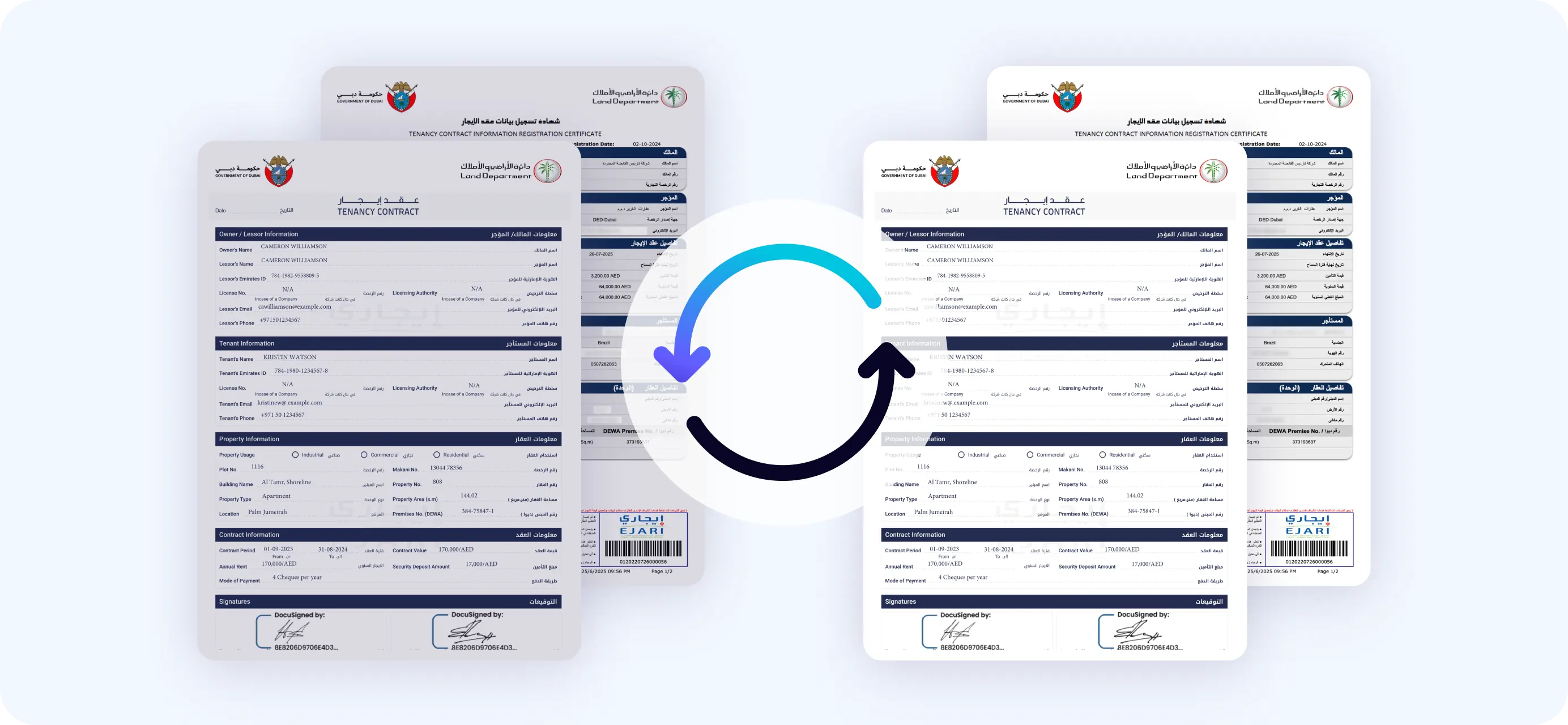
Tenancy renewal in Dubai is the process of extending an existing rental contract in compliance with regulations set by the Real Estate Regulatory Agency (RERA). This includes renewing the "tenancy contract" itself, which outlines the terms agreed upon by the landlord and tenant, as well as the Ejari, a mandatory registration system administered by the Dubai Land Department to monitor rental agreements.
Renewal is required to maintain a formal agreement and ensure that both tenants and landlords are protected under applicable laws. However, misunderstandings and outdated information often make this process seem overwhelming.
Common Myths and Facts About Tenancy Renewal
Myth 1. The rent must always increase.
Fact: RERA provides a Rent Calculator that determines the permissible increase based on the current market rental value of the property compared to the average rate for similar units in the same area. A landlord can only propose an increase if the tenant's current rent is a certain percentage below this average. For tenants, this means understanding that an increase is not a given. For landlords, it confirms that increases must be justified and aligned with RERA's guidelines.
Myth 2. Rent can be increased to any amount the landlord wants.
Fact: Rent increases are regulated strictly by RERA guidelines. If a landlord wishes to impose an increase, they must ensure it adheres to the rental index calculator. Any arbitrary rent hike is unlawful and can be disputed.
Myth 3. Renewal fees must be paid annually to agents.
Fact: A renewal fee is not required if the landlord and tenant agree to renew the tenancy directly. In such cases, either the tenant or the landlord can handle the renewal themselves or use digital platforms like Habi without paying any agent fees.
Myth 4. Ejari and tenancy renewal are the same thing.
Fact: Ejari refers to the registration of a tenancy contract with the Dubai Land Department. While Ejari must be updated upon renewing a tenancy, it is a separate step. Failing to renew Ejari could lead to legal complications for both landlords and tenants.
Myth 5. If the Ejari has expired, you cannot renew the tenancy.
Fact: An expired Ejari is a signal that the contract needs renewal, not a barrier to it. The process flows in the opposite direction. First, the landlord and tenant must sign a new tenancy contract. This signed contract is then used as the primary document to apply for the renewal of the Ejari registration.
Myth 6. Landlords can evict tenants at any time during renewal.
Fact: Dubai law protects tenants from arbitrary eviction. Landlords can terminate a tenancy only under specific circumstances, such as selling the property or using it for personal purposes, and even then, a 12-month written notice is required.
Myth 7. There is no need to sign a new contract for renewal.
Fact: A new contract is a fundamental requirement of tenancy renewal. This document is the basis for renewing Ejari and updating your details with utilities like DEWA. In the event of a disagreement, a valid, current contract is the primary evidence for RERA or the rental dispute court.
Myth 8. Security deposits are refunded at renewal.
Fact: A security deposit typically remains with the landlord throughout the lease period, including after renewals. Refunds are processed at the end of the tenancy.
Myth 9. If the landlord doesn't send a 90-day notice, the tenant must vacate.
Fact: The tenant is not obligated to vacate simply because a notice was not received. The 90-day notice period is a requirement for the party intending to change the terms, typically the landlord proposing a rent increase or the tenant confirming they will not renew. If neither party gives formal notice, the law defaults to automatic renewal of the contract under the same terms and conditions.
Tips for an Easy Tenancy Contract Renewal
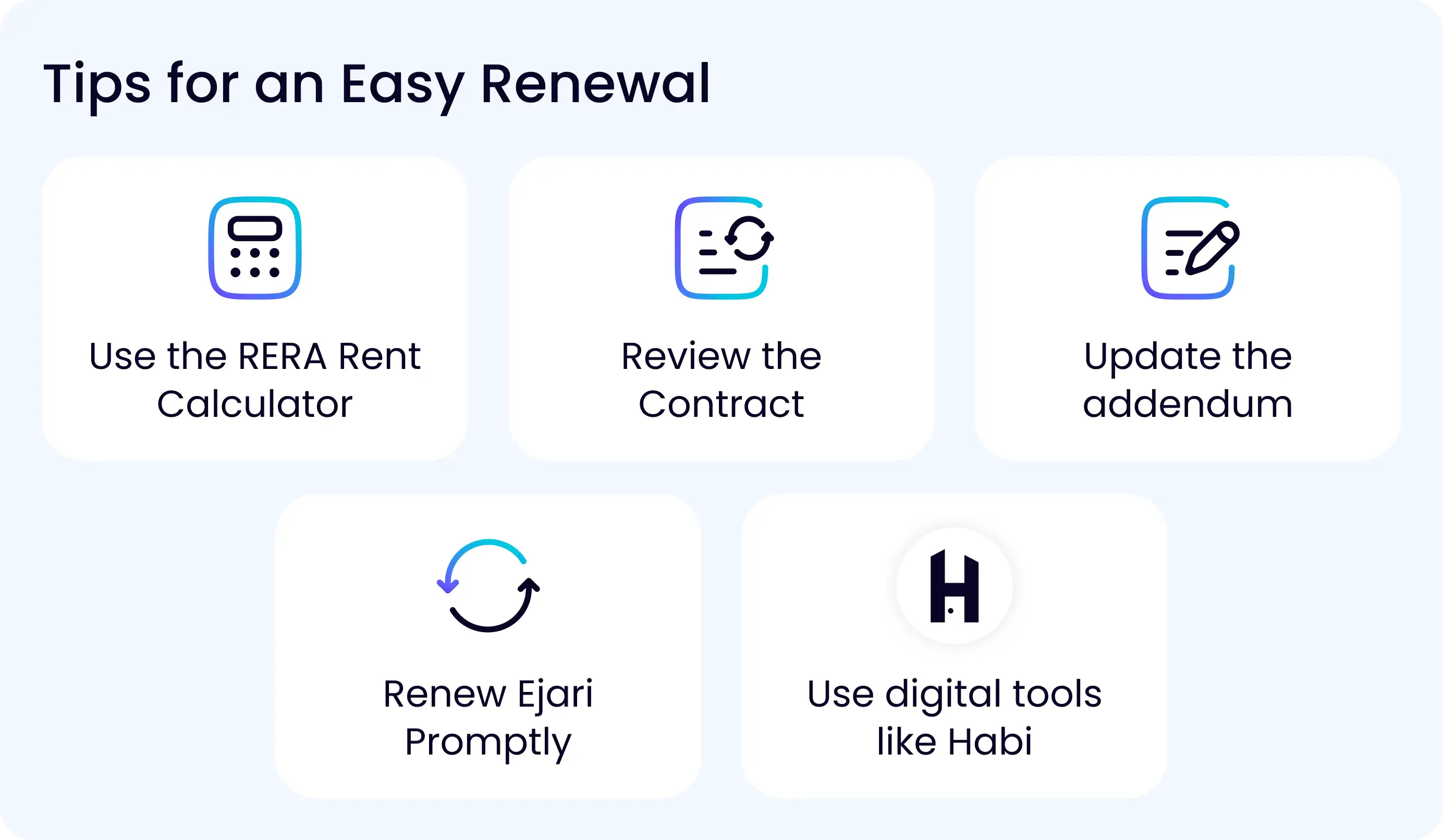
- Use the RERA Rent Calculator: Before discussing rent, both landlords and tenants should check the official calculator to understand the fair market value and any permissible increase.
- Review the Contract: Treat renewal as an opportunity to update contact details, review the dates and annual rent, or adjust payment terms if both parties agree.
- Update the addendums: This ensures the contract reflects current needs, such as adjusted and clarify maintenance responsibilities or payment terms.
- Renew Ejari Promptly: Once the new tenancy contract is signed, complete the Ejari registration quickly to maintain uninterrupted access to government and utility services.
- Use digital tools like Habi